How Often Should Automatic Gates Be Serviced? A Guide for Strata and Facility Managers


An automatic gate should be serviced to a documented schedule that suits the equipment and the way the site uses it. Start with the manufacturer's maintenance instructions, then have a competent gate technician assess whether traffic, exposure, condition or recurring faults call for more frequent attention. If the service history or recommended interval is unknown, arrange an initial inspection rather than waiting for a breakdown.
For strata and facility managers, the useful question is more specific than “Is an annual visit enough?” It is “What needs inspecting, when is it due, and what evidence will show that the work was done?” A busy basement entrance and a lightly used driveway can have very different demands, even when their gates look similar.
How to set the service interval
Find the instructions for the actual gate operator and associated equipment, together with the commissioning and previous service records. Check whether maintenance is triggered by elapsed time, operating cycles or both. Where the manufacturer specifies both limits, plan around the first one reached. Confirm what the equipment counts as a cycle before using a controller reading to estimate demand.
Ask the technician to put the recommended interval, its basis and the next due date in writing. A useful maintenance plan identifies the equipment covered, the work included and what would trigger an earlier visit. It also distinguishes routine observations by the site manager from servicing and testing by a competent technician.
Safe Work Australia's model Code of Practice for managing plant risks describes following manufacturer recommendations and, where none exist, recommendations from a competent person. It also describes an annual inspection fallback where neither is reasonably practicable. That fallback is not a universal annual service schedule for every gate. Workplace obligations and the code's application should be checked for the relevant state or territory and site.
If a contractor proposes the same interval for every entrance, ask how they have accounted for your equipment, its use and the consequences of a fault. The schedule should be explainable to the next manager who takes over the building.
How to plan gate servicing
| Planning factor | Information to collect | Service decision |
|---|---|---|
| Equipment instructions | Operator model, fitted devices and current manuals | Use the specified calendar or cycle limits and confirm what is due first. |
| Traffic and peaks | Complete cycles, busy periods and changes in use | Ask whether the existing interval and operator duty still suit the entrance. |
| Exposure and condition | Water, dust, corrosion, debris and visible wear | Review the inspection scope and whether visits should be more frequent. |
| Recurring or new faults | Symptoms, dates, previous findings and repairs | Arrange fault assessment rather than waiting for the next routine visit. |
| Unknown history | Available manuals, asset details and last known service | Start with a baseline inspection and a documented maintenance plan. |
Set the interval for the equipment and site; a new fault can require earlier attendance.
What can bring the next service forward
Give the technician a brief covering the conditions that may affect the gate between visits:
- Traffic and peaks. Record available cycle counts, busy periods and changes in occupancy or deliveries. A daily average can hide repeated operation during a short morning peak.
- Exposure. Note coastal conditions, dust, water, drainage problems and wind exposure, including changes since the last inspection.
- Condition and history. Share repeat callouts, component replacements, corrosion, unusual noise and intermittent faults. Include previous recommendations that remain outstanding.
- Changes to the entrance. New access controls, altered gate infill, nearby building works or a changed pedestrian route may warrant a fresh assessment.
- Dependence on the gate. Explain whether failure blocks the only vehicle entry, creates queues or leaves a security opening. Agree how access will be managed during servicing or a fault.
An impact, flood, suspected safety-device failure or unexpected movement needs prompt assessment. A date in the maintenance calendar is not a reason to leave a new fault until the next planned visit. For an existing fault, use the automatic gate repair service and describe what the gate is doing.
What a gate service should cover
A gate service should consider the moving structure, operator, safety devices and access controls together. The precise checks and test methods depend on the installation. Ask for an equipment-specific scope rather than a line on an invoice saying “gate serviced”.
The gate and its supports
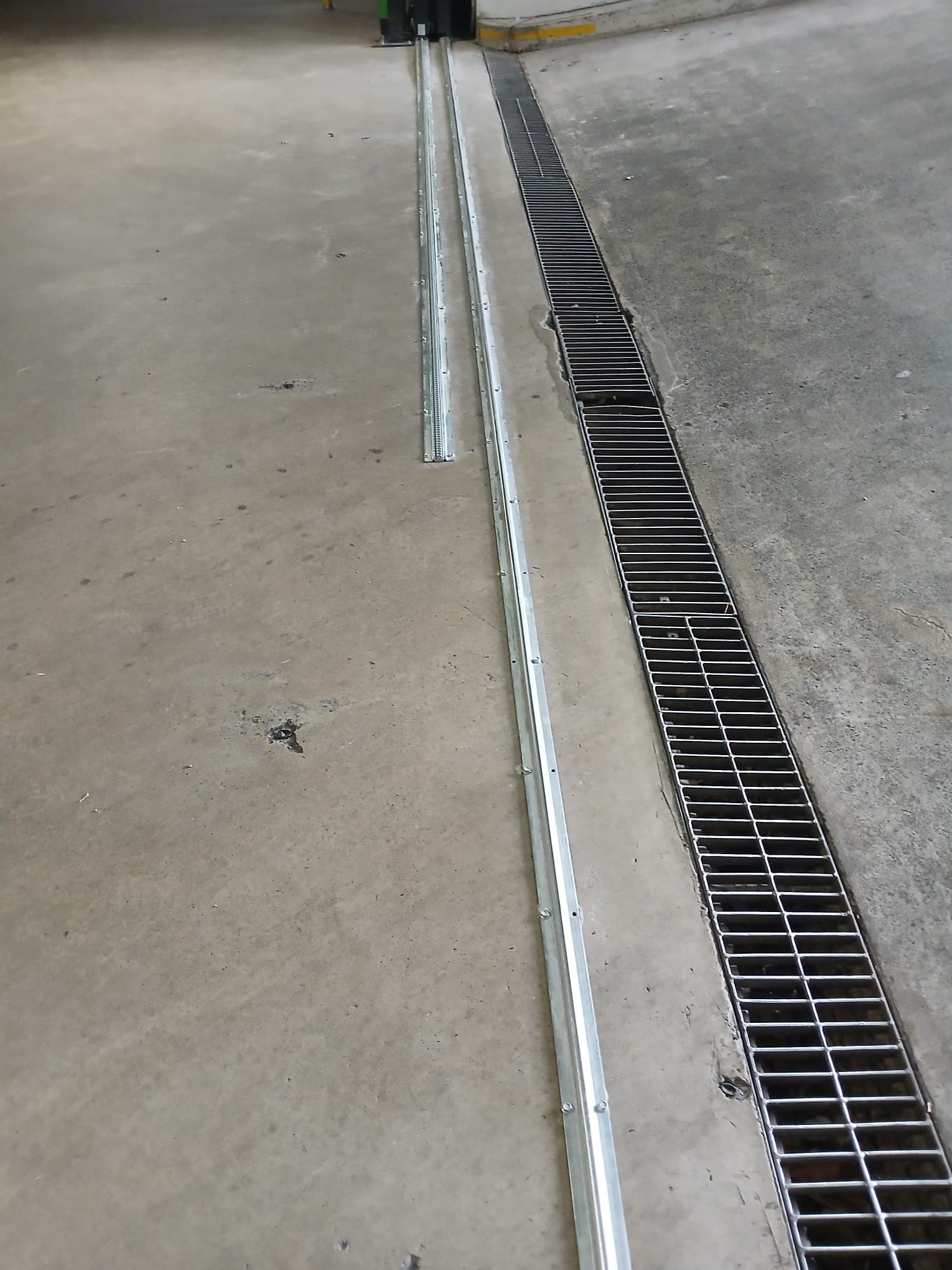
For a sliding gate, ask about the condition of the track, wheels, guides, stops, rack, fixings and supporting structure. For a swing gate, the relevant items include hinges, posts, operator mountings, stops and locking hardware. Drainage and the surrounding surface can also affect the entrance.
SafeWork NSW's industrial gate safety guidance identifies worn stops, damaged posts and failed guides as potential causes of falling gates. Its advice calls for competent inspection and maintenance of the gate structure as well as the drive mechanism.
The operator and safety devices
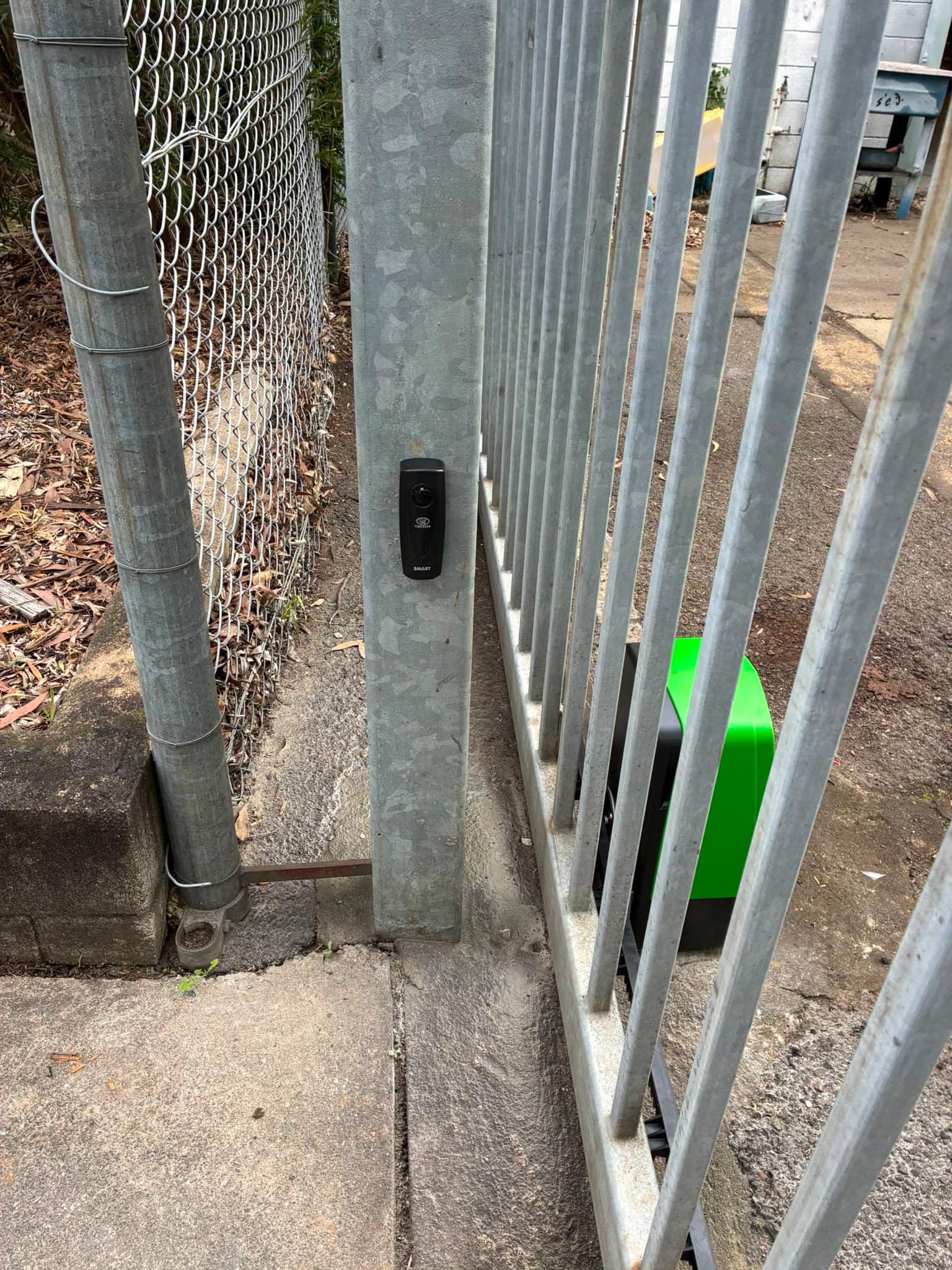
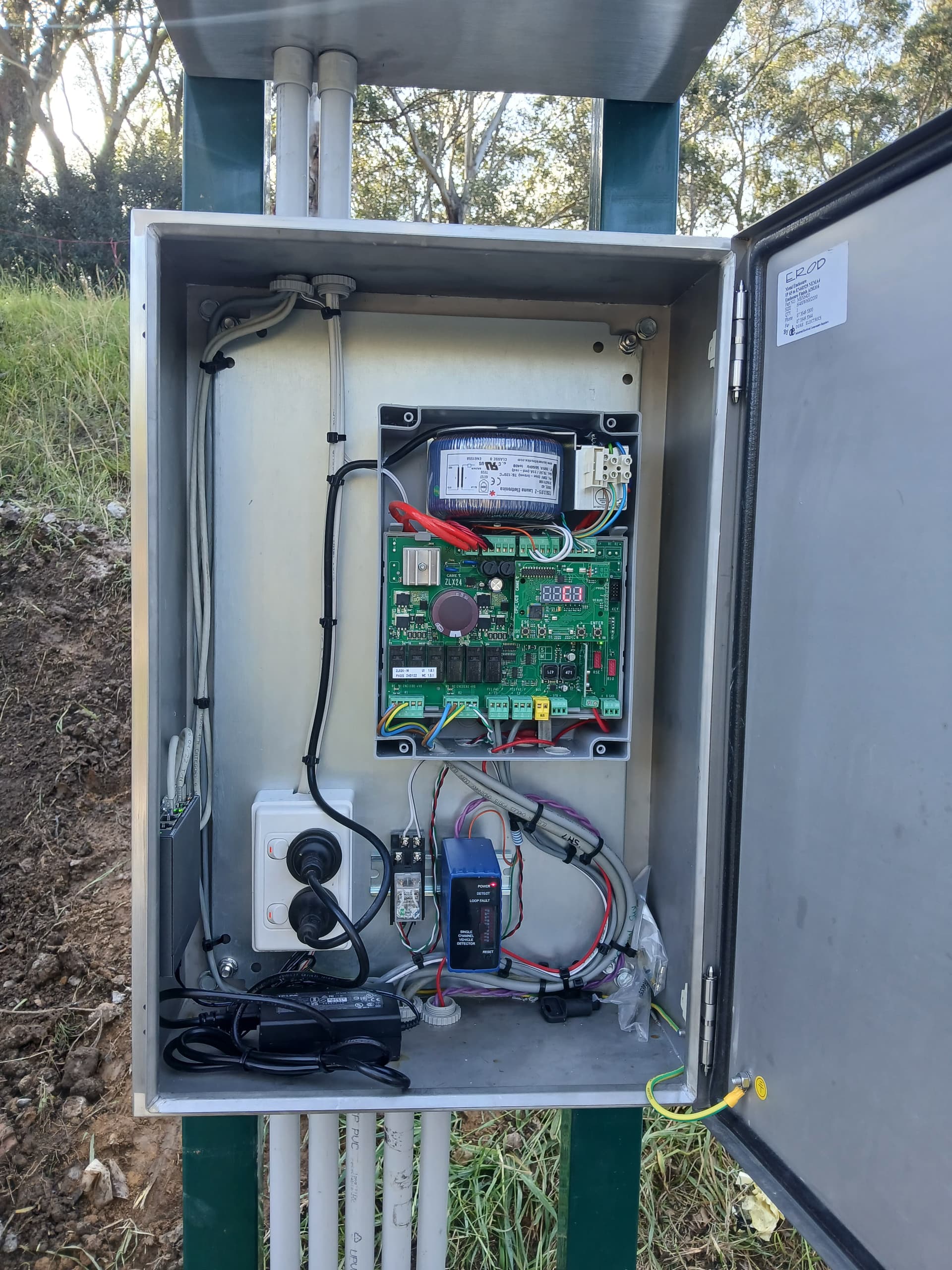
The technician should explain which operator components and fitted safety devices were inspected or tested, what method was used and what the results mean. Depending on the system, the scope may include the motor, transmission, controls, limits, safety edges, photoelectric beams and vehicle detection loops.
A gate opening successfully does not demonstrate that every protective function works. Ask the technician to distinguish an observed movement from a completed safety test, and to identify anything they could not inspect. Checks involving wiring, settings or powered movement belong with people competent to perform them using the appropriate procedures.
Credentials and normal use
Describe the entrance as users experience it. Do remotes work intermittently? Does an intercom release fail after hours? Has a vehicle detector become unreliable? Ask whether the service includes the connected vehicle access controls or whether those need a separate visit.
Agree how the site manages an outage, who holds the operating instructions and who can authorise access arrangements. Manual release needs a site-specific procedure: disconnecting an operator can change the protection available. Do not assume that a faulty powered gate is safe to move by hand.
What managers can record between visits
Managers can help diagnosis by noting changes during normal use from a safe position. Keep a short log of unusual sounds, slower movement, repeated reopening, visible damage, controller messages visible without opening an enclosure, and the time and conditions when a fault occurs. Record reports from residents or staff as reports until the cause is established.
Do not enter a movement or trapping zone, remove covers, adjust force or speed settings, bypass sensors or use a person or vehicle to test a protective device. Agree any routine cleaning or observation tasks with the service provider and follow the equipment instructions. Our guide to electric gate mistakes explains other avoidable causes of faults and risk.
Stop use, keep people clear and arrange competent assistance if the gate appears unstable, leaves its guides, moves unpredictably, has damaged protective equipment or presents exposed electrical parts. Follow the site's emergency procedure where anyone is in immediate danger. Securing or isolating an unsafe gate should be handled by someone competent to do it safely.
What to ask for in the service report
A useful report should let a manager understand the gate's condition and act on the findings. Request:
What a useful service report contains
| Report section | What to request | Why it matters |
|---|---|---|
| Asset and scope | Date, gate and operator details, technician, work covered and limitations | Makes clear which entrance and components were assessed. |
| Findings and tests | Defects, photographs, test results, measurements with units and relevant criteria | Shows the basis for the recommendation. |
| Completed work | Adjustments, repairs, replacement parts and checks after the work | Separates work performed from work only proposed. |
| Handover status | Returned to service, isolated or restricted; reasons and outstanding issues | Tells the manager how the entrance may be used. |
| Next actions | Priorities, responsible person, due dates and next service trigger | Gives the next manager or contractor a clear follow-up record. |
Use the report to distinguish findings, completed work and outstanding actions.
Keep the report with previous findings, manuals and repair records so the next visit starts with context. An unresolved recommendation should stay visible until it has been addressed; approving a quote and completing the work are separate events.
Strata gate inspection in Westmead
On 6 August 2026, Rapid inspected the basement sliding gate at a 32-apartment strata building in Westmead, western Sydney.
The building had four reports of its basement gate reopening during closing over a fortnight. Two contractor callouts had restored access, but the intermittent problem returned. With 44 parking spaces and one shared vehicle entrance, another fault could leave residents queuing on the driveway.
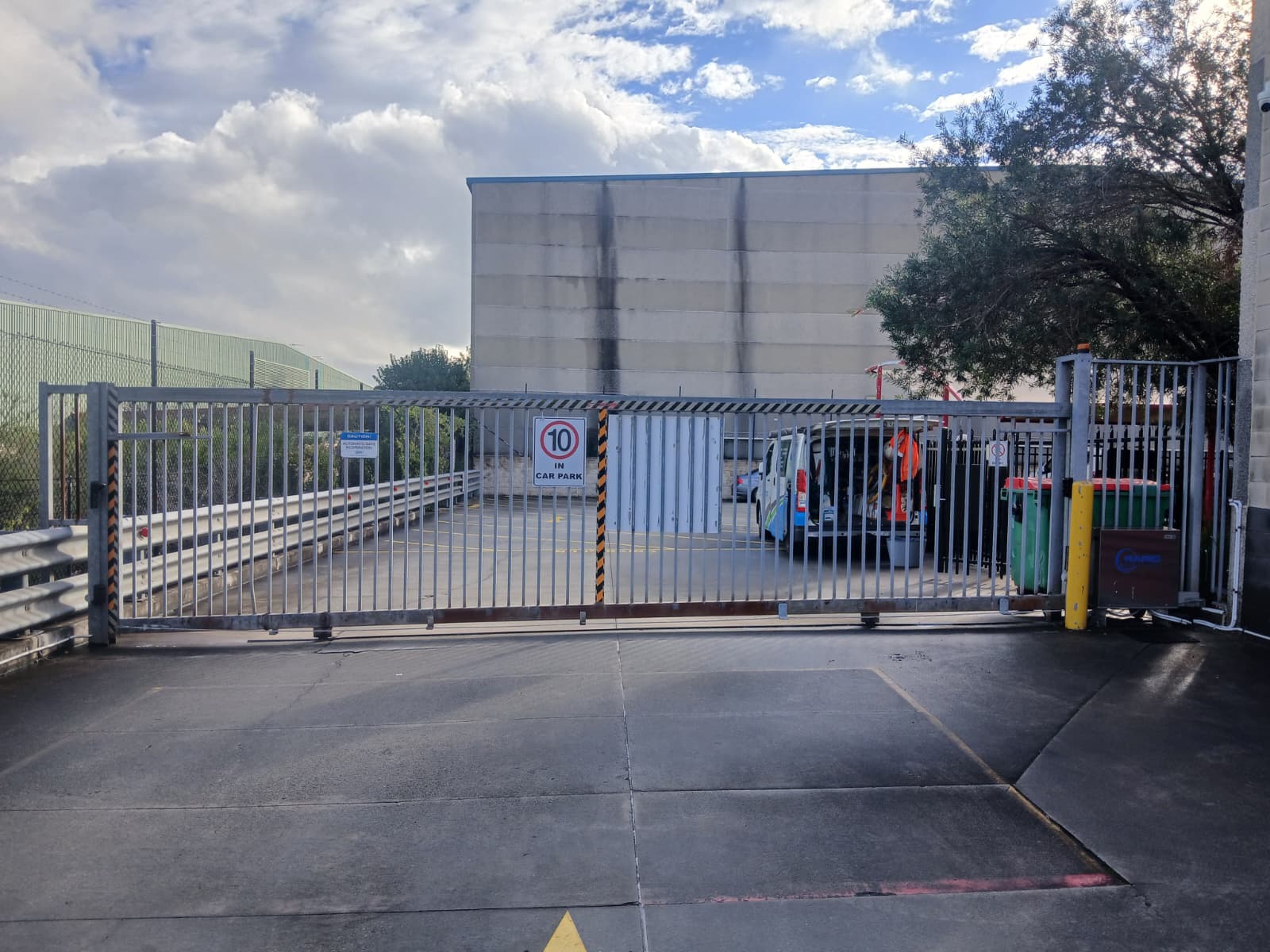
The entrance used a tracked steel sliding gate across a 4.2-metre opening, operated by a CENTSYS D5-Evo installed in May 2023. Residents entered with remotes, visitors used the intercom, and an exit loop activated the gate for departing vehicles. A seven-day usage sample recorded 644 complete open-close cycles, averaging 92 a day.
At the 6 August inspection, the technician found a loose bracket on the closing photocell receiver and residue on its lens. Gate vibration coincided with an intermittent loss of the clear-path signal. Leaves and fine grit were also present along part of the track and in the drain basket following nearby landscaping work.
The technician replaced the receiver bracket and fixings, cleaned and realigned the photocells, removed accessible track debris and cleared the drain basket. The motor was retained, and the speed and force settings were left unchanged. The loose receiver supported the repair recommendation; the track debris was addressed as a separate maintenance finding.
Following the work, ten complete operating cycles were recorded without unexpected reopening. Separate functional checks covered the fitted protective devices, two resident remotes, the visitor intercom and the free-exit loop. Average travel times were 15.2 seconds opening and 15.8 seconds closing, excluding hold-open time.
The visit totalled AUD 478.50 including GST. The next scheduled service was proposed for 6 November 2026 to review the photocell mounting, track condition and guide roller wear. The three-month interval reflected the entrance's usage and recent fault history; it was not a manufacturer requirement or a general interval for every strata gate.
No further reopening reports or callouts were recorded between 7 and 20 August. That short follow-up period supported continued monitoring rather than a claim of proven long-term reliability. The service record connected the reported symptom, observed condition, completed work and next action in a form the strata manager could use.
Inspection and service record
Site and equipment
| Item | Recorded details |
|---|---|
| Location | Westmead, NSW; unnamed strata apartment building |
| Building | 32 apartments and 44 basement parking spaces |
| Attendance | Thursday 6 August 2026, 9:15 am to 11:15 am AEST |
| Reason for attendance | Intermittent reopening during closing, following four reports between 23 July and 5 August and callouts on 24 July and 1 August |
| Asset | VG-01; one tracked steel sliding gate across a 4.2 m clear opening |
| Gate mass | Approximately 280 kg, estimated rather than weighed |
| Operator | CENTSYS D5-Evo, standard mains-fed version with a 12 V battery-driven motor |
| Installation date | 18 May 2023 |
| Access controls | Resident remotes, visitor intercom and free-exit vehicle loop |
| Protective devices | Closing photocell pair and monitored leading safety edge through a compatible safety interface |
| Previous planned service | 12 May 2026; no outstanding structural work recorded in the service history |
| Environment | Sheltered basement ramp, recent landscaping beside the driveway, grit at the track and leaves in the drain basket; no flooding reported |
| Access during work | Sole vehicle entrance closed from 9:40 am to 10:15 am; residents notified and a separate pedestrian exit remained available |
Usage and operating observations
| Measure | Recorded value | Basis |
|---|---|---|
| Usage period | 23 July at 9:15 am to 30 July at 9:15 am AEST | Seven elapsed days |
| Completed cycles | 644 | Temporary logger counting each complete open-close sequence once |
| Average daily use | 92 cycles | 644 divided by seven days |
| Busiest sampled hour | 21 cycles | 24 July, 7:00 am to 8:00 am AEST; a sampled peak rather than a proven maximum |
| Opening travel after work | 15.2 seconds | Average of three timed observations |
| Closing travel after work | 15.8 seconds | Average of three timed observations, excluding hold-open time |
| Operating check after work | Ten complete cycles without unexpected reopening | A short operating observation, separate from protective-device checks |
Vehicle movements, access commands and complete gate cycles are different measures. Travel times describe this entrance's operation and are not target settings for another installation.
Inspection findings and work
Track and drainage
Fine grit and leaves were present along approximately 1.2 m of the track near the closed position. Leaves covered roughly half the accessible drain basket, based on visual assessment. No derailment or damaged track was observed.
Accessible debris was removed and the basket cleared. Subsequent operating checks showed no visible interference at that track section. Inspection of underground drainage beyond the basket was outside the visit's scope.
Guides and supports
The inspected guides, end stops and supporting posts showed no visible displacement, missing components or loose mounting points. Minor surface marking on the upper guide rollers was recorded for comparison at the next visit. No structural parts were replaced.
The inspection record did not include dimensional roller-wear measurements or a structural engineering assessment. It therefore made no finding against a numerical wear limit or claim of structural certification.
Photocell receiver
The closing photocell receiver moved at its bracket fixings, and residue was visible on its lens. During controlled observation, the clear-path indicator intermittently dropped as the gate vibrated.
The receiver bracket and fixings were replaced, the lenses cleaned and the pair realigned. A stable clear-path signal was recorded during ten complete operating cycles. The finding supported the targeted repair, while leaving the cause of every historic report unconfirmed.
Operator and protective devices
The motor was retained, with no increase to speed or force settings. Separate controlled functional checks recorded the expected stop or reopening response from the closing photocells and monitored leading edge for their configured functions.
The repair scope did not include a complete compliance audit. No force-measurement report, electrical test certificate or structural certification forms part of this inspection record.
Access controls and handover
Two selected resident remotes, the visitor intercom release and the free-exit loop each produced the intended command. The remote checks covered the selected devices rather than every resident's remote.
The operating instructions and manual-release key custody were reviewed with the manager. The handover recorded a return to normal operation within the completed repair scope, with guide roller condition, track debris and photocell mounting stability identified for the next planned inspection.
Maintenance plan
| Item | Action |
|---|---|
| Next planned service | 6 November 2026, three calendar months after the visit |
| Basis for the interval | Sampled use of about 92 cycles a day, recent intermittent faults, the sole vehicle entrance and a need to check whether debris or bracket movement recurs |
| Equipment instructions | Reconcile the proposed interval with the exact installed equipment's instructions and the competent person's site assessment; no three-month manufacturer requirement is claimed |
| Earlier attendance | Arrange assessment for a new fault, impact, suspected protective-device failure or change in movement |
| Cycle threshold | No additional cycle-based service trigger is specified in the maintenance plan |
| Site management | Ask the gardening contractor to keep sweepings away from the track and drain approach |
| Further repairs | No motor or structural replacement proposed; compare upper guide roller condition at the next visit |
Follow-up record
| Period | Fault reports | Callouts | Available context |
|---|---|---|---|
| 23 July to 5 August | 4 | 2 | Fourteen calendar days before the inspection; daily traffic for the full period unavailable |
| 7 August to 20 August | 0 | 0 | Fourteen calendar days after the inspection; daily traffic for the full period unavailable |
No further reopening faults were reported in the follow-up window. The short period and incomplete traffic comparison do not establish a long-term failure rate or a quantified repair benefit.
Cost breakdown
| Item | Amount excluding GST |
|---|---|
| Attendance and initial 30 minutes | AUD 180.00 |
| Additional labour, 1.5 hours at AUD 140.00 per hour | AUD 210.00 |
| Receiver bracket and fixings | AUD 45.00 |
| Subtotal | AUD 435.00 |
| GST at 10 percent | AUD 43.50 |
| Total including GST | AUD 478.50 |
The two-hour attendance covered assessment, the minor repair, accessible cleaning, checks and reporting. The 35-minute vehicle closure formed part of that attendance. Motor replacement, control board replacement, structural work, specialist drainage work and future service visits were excluded. The invoiced total for this visit was AUD 478.50 including GST. Costs vary according to the equipment and work required.
Product reference
The CENTSYS D5-Evo installation manual describes a 12 V battery-driven sliding gate operator for gates up to 500 kg. Gate mass alone does not establish suitability; the complete installation and operating conditions also need assessment.
How to compare maintenance proposals
Compare what each proposal covers before comparing price. Check how many gates and connected devices are included, the planned visit frequency, reporting, parts and labour allowances, exclusions, access arrangements and charges for additional work. Clarify whether breakdown attendance is included and what any response commitment actually promises.
For a gate with repeated faults, ask for the diagnosed cause and the options for addressing it. Another service visit may be appropriate, but recurring problems may also justify repairs, changes to the entrance or an equipment upgrade. A recommendation should show why that option suits the site.
Arrange a maintenance assessment
If you cannot locate the last report or explain when the next visit is due, start by establishing the gate's current condition and service requirements. Send the equipment details, available history, recent symptoms and access constraints when booking.
Rapid Automatic Access offers planned gate servicing and maintenance assessments. Ask for a documented scope, findings and a service schedule suited to your entrance, so future visits have a clear purpose and record.
Unsure when your gate is due for a service?
Set a maintenance plan for your entrance
Rapid Automatic Access can assess the gate and connected equipment, document findings and recommend a service scope and schedule for the way your site operates.
Related articles
Compliance & Safety
10 Electric Gate Mistakes That Lead to Faults or Risk
Ten avoidable electric-gate mistakes involving maintenance, DIY repairs, remotes, worn components, installation, product selection and safety.
Compliance & Safety
Are Automatic Gates Safe and Secure?
Automatic-gate safety and security are different design problems. Learn what to assess for intrusion, credentials, tailgating, movement hazards and outages.
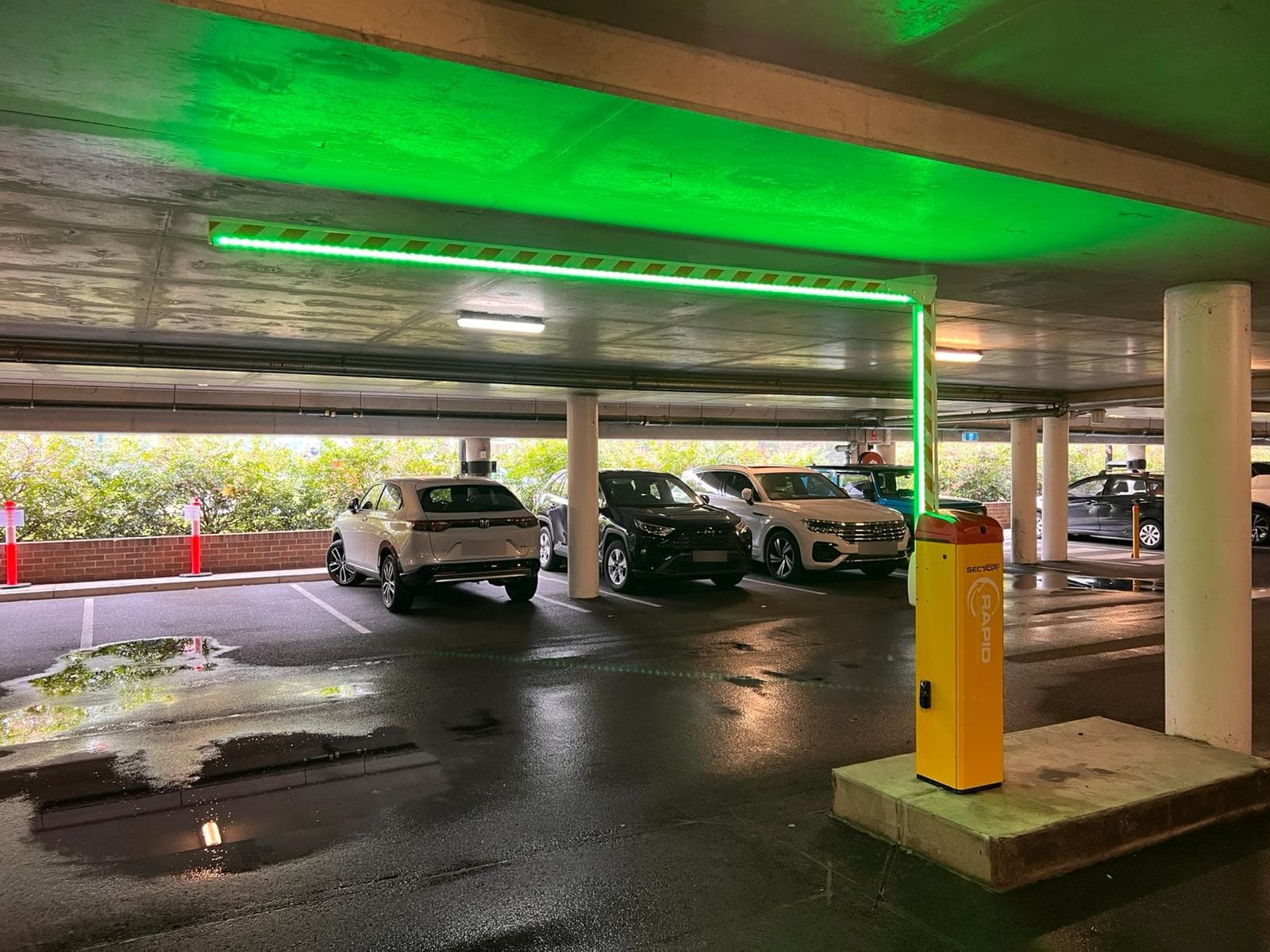
Boom Gates
What to Know Before Installing a Boom Gate in Your Strata
A planning checklist for Australian strata boom gates covering owner approval, site design, electrical work, access, safety and ongoing maintenance.