Half-Height vs Full-Height Turnstiles: How to Choose

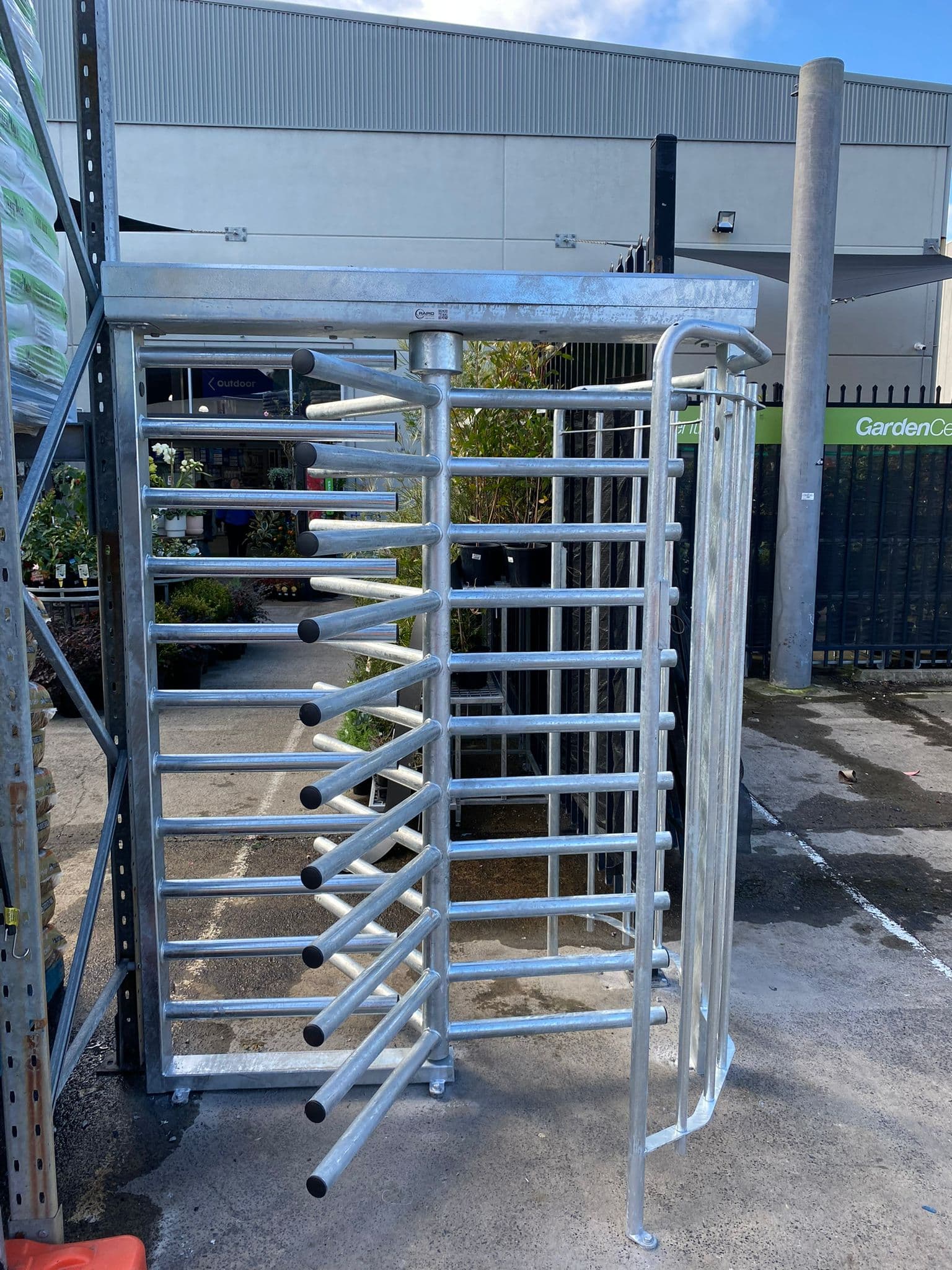
Half-height and full-height turnstiles meter authorised pedestrian movement but provide different levels of physical resistance, visibility and user experience. Half-height products include tripod and waist-height arm formats. Full-height products use a taller rotating cage or rotor. The decision should follow a site risk and movement assessment — not a blanket assumption that taller is always better.
Decision Matrix at a Glance
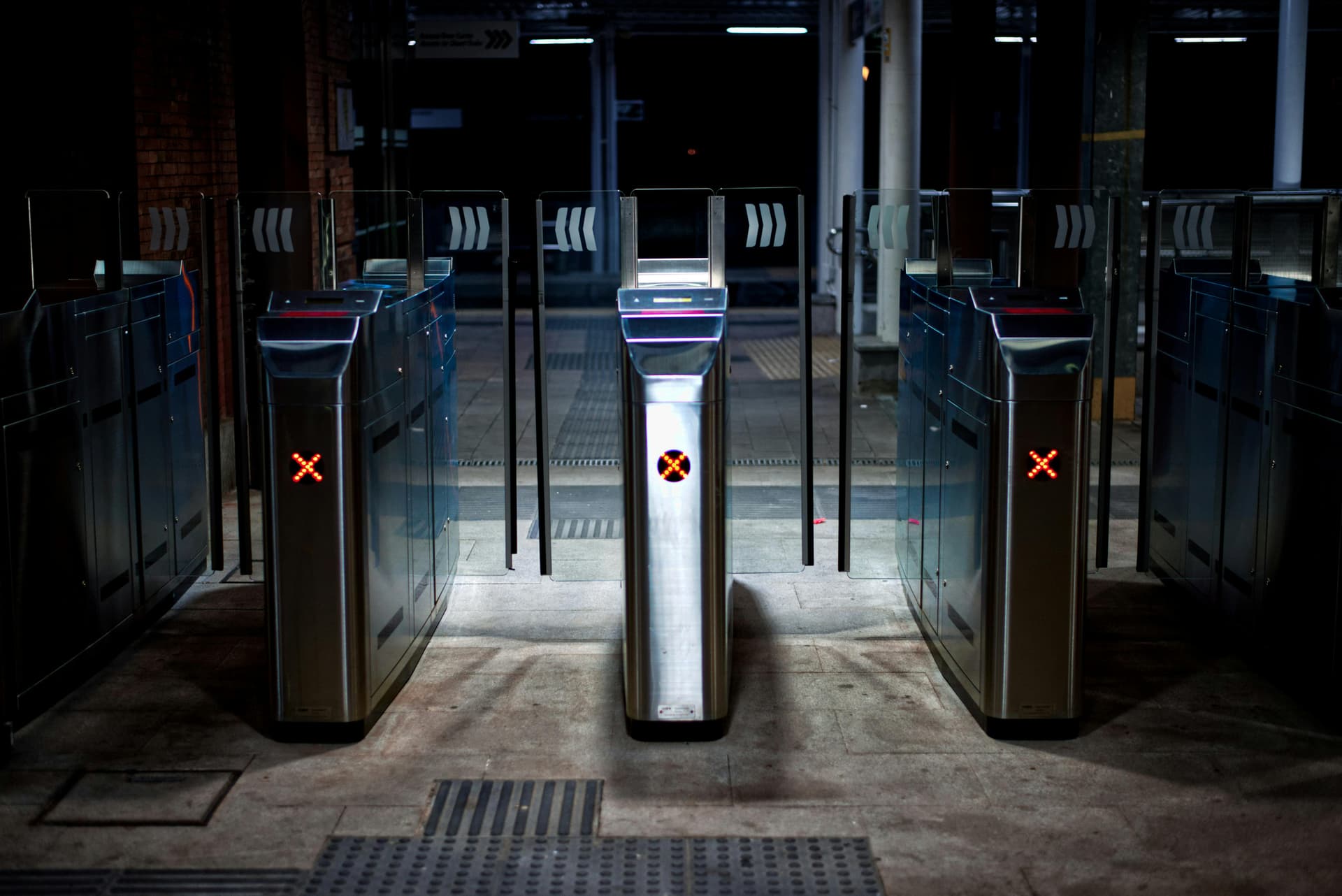
Half-height turnstiles are more open visually and are commonly used where staff can supervise the entry and casual climb-over is an accepted residual risk. Full-height turnstiles provide greater resistance to stepping over or ducking under and can suit perimeter entries with less continuous supervision. Neither format authenticates a person by itself, prevents credential sharing or replaces an accessible route, emergency-egress design and incident response.
Half-height and full-height turnstile comparison
| Decision factor | Half-height | Full-height |
|---|---|---|
| Casual bypass resistance | Lower; arms may be stepped over or ducked under | Higher when the rotor and surrounding perimeter form a continuous control line |
| Supervision | Better suited where staff can see and respond to exceptions | Can support less continuously staffed perimeter entries, with remote assistance still planned |
| User experience | More visually open and easier for staff to assist | More enclosed and can be slower or less comfortable for users carrying equipment |
| Site works | Floor fixing, power, data and an adjacent accessible lane | Foundation, overhead clearance, perimeter tie-in, weather protection and accessible passage |
| Common design mistake | Expecting the barrier alone to prevent tailgating or climb-over | Leaving an easier route around the unit through fencing or an adjacent gate |
The final choice depends on the selected model, adjacent accessible passage, perimeter and emergency arrangement.
Bypass Resistance and Perimeter Continuity
Define the behaviour the entrance should deter: stepping over, ducking under, squeezing beside the unit, forcing the mechanism, following an authorised person or passing a credential back. A full-height rotor addresses some casual physical bypass more strongly, but gaps around the unit, an unprotected adjacent gate or weak fencing can undermine it. The anti-tailgating plan should cover credentials, layout, detection, supervision and response as well as the barrier.
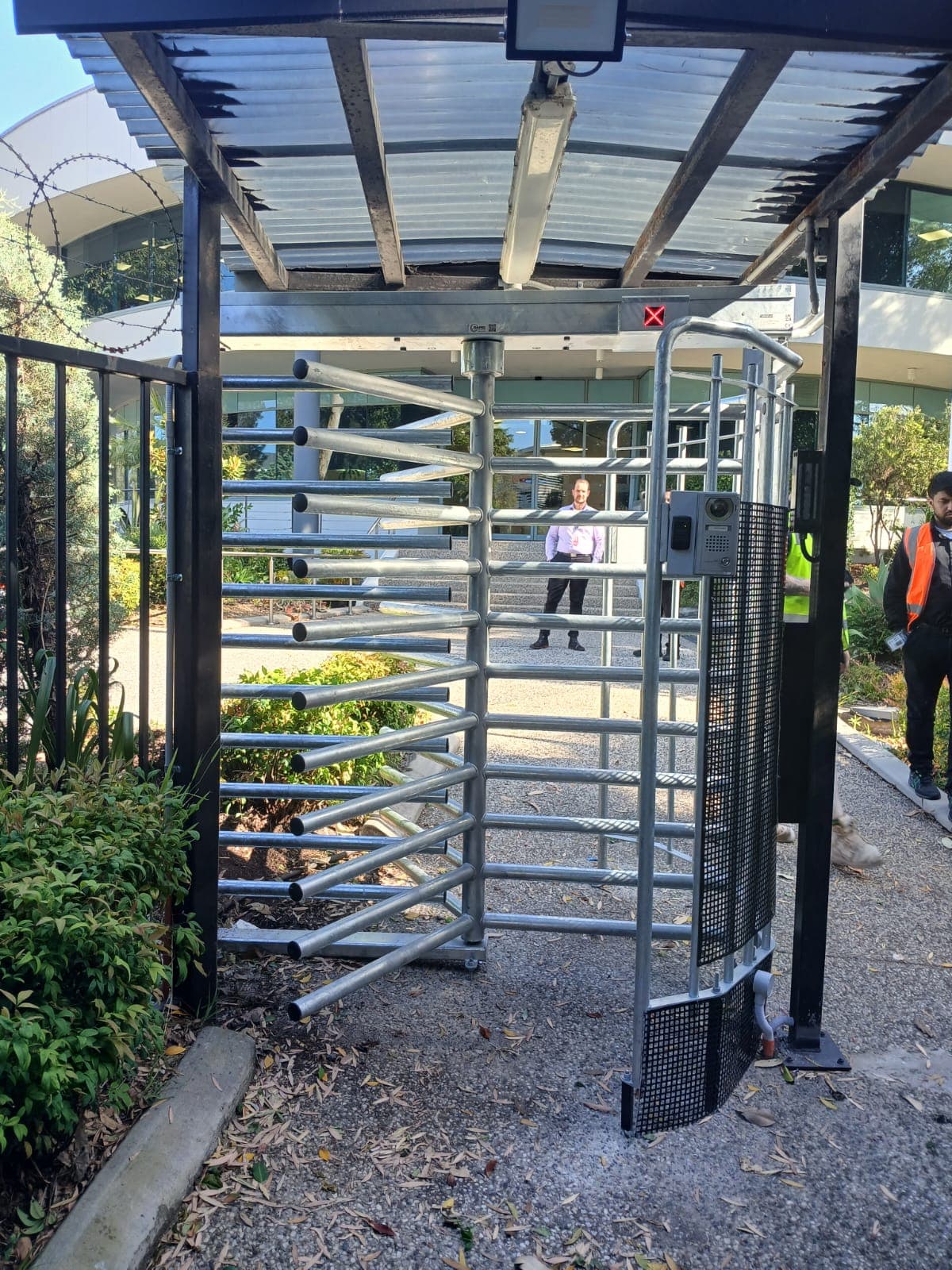
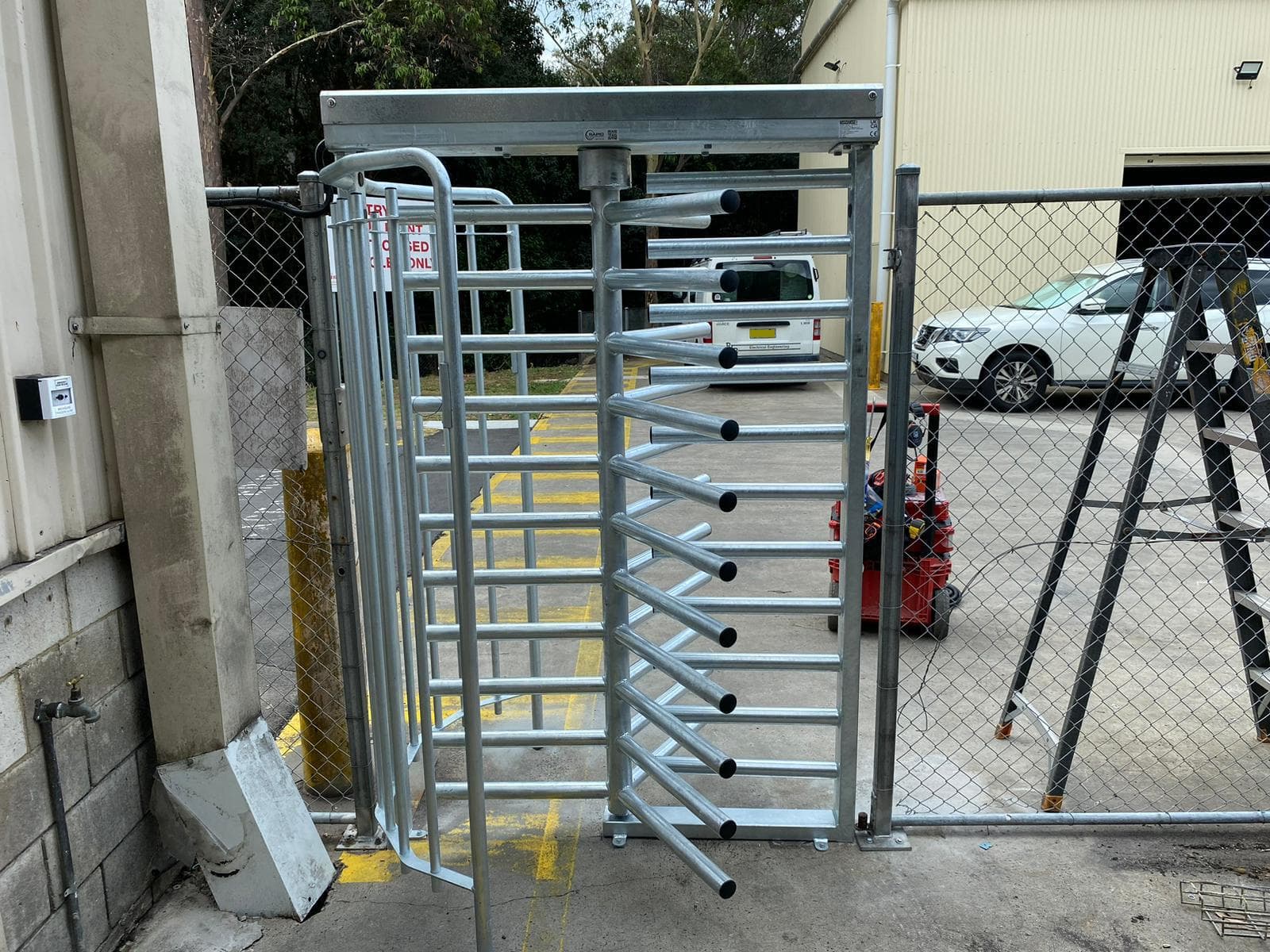
In this Rapid installation, the full-height rotor is integrated with a roofed frame, mesh side control, status indication and an adjacent gate. Those details matter as much as rotor height: an easier route around the barrier, exposed electronics or an unmanaged secondary gate can undermine the intended security outcome.
Pedestrian Flow and User Effort
Count expected and peak movements in each direction, then test the proposed reader and passage. Bags, tools, protective clothing, luggage and shift-change peaks can slow either format. Full-height rotors may feel more enclosed and require users to coordinate their movement with the rotating section. Half-height arms may be easier to supervise and assist, but the actual experience varies by mechanism and lane. Use exact manufacturer data and a realistic passage trial where flow is critical.
Accessible Passage Is a Core Lane
Standard rotating arms are not a suitable passage for every user. Plan the wider accessible route, controls, circulation space, signage and security behaviour at the same time as the turnstile bank. The Disability (Access to Premises — Buildings) Standards 2010 and applicable building provisions require project-specific professional review. A separate pedestrian access-control lane should be equally identifiable and convenient, not an improvised service-gate exception.
Egress and Emergency Behaviour
Determine whether the turnstile is on a required path of travel and what happens during a fire alarm, power failure, control fault or evacuation in the reverse direction. NCC Part D1 addresses safe access and egress at building level. Breakaway arms, free rotation, fail-safe release or an adjacent exit are product and layout options — not generic compliance answers. The relevant building, fire and access professionals must resolve the project’s required exit capacity, hardware and interfaces.
Indoor and Outdoor Environment
For outdoor and industrial sites, confirm corrosion resistance, ingress protection, drainage, wind exposure, canopy needs, foundation design, lighting and the operating temperature of readers and controls. For indoor sites, check floor build-up, fixing and cable routes, circulation, acoustics, cleaning access and how the equipment fits the lobby. Full-height does not automatically mean outdoor-rated, and half-height does not automatically mean indoor-only.
Credentials, Visitors and Supervision
Specify the access-control integration for employees, contractors and visitors; direction rules; anti-passback; intercom or reception release; event records; and credential cancellation. A supervised half-height lane may allow staff to challenge unusual behaviour quickly. A less supervised full-height lane needs clear remote assistance and alarm-response procedures. In either case, define who responds when a user is denied, trapped, confused or unable to use the standard passage.
Maintenance and Lifecycle Cost
Compare frames, rotors, barriers, readers, foundations, adjacent gates, fencing, power and data, fire interfaces, commissioning and software. Then include cleaning, lubrication or adjustment where specified, inspection, consumables, replacement parts and fault response. Ensure technicians can reach the mechanism safely and that a lane can be isolated without leaving the perimeter uncontrolled. Set a maintenance plan around the manufacturer’s instructions and the site’s traffic and downtime risk.
When Each Format Is More Likely to Fit
A half-height turnstile is more likely to fit when the entry is supervised, visual openness matters, the accepted threat does not require strong climb-over resistance and a separate accessible lane is well integrated. A full-height turnstile is more likely to fit when perimeter continuity and stronger resistance to casual bypass matter more, and the site can accommodate the enclosure, foundations, accessible route and emergency arrangement. Confirm the decision against real flow, risk, exact product specifications and professional compliance review.
Site-Survey Checklist
Before requesting comparable proposals, document the threat and bypass behaviours to address; normal and peak pedestrian counts; movement in each direction; user groups, tools and carried items; staffed hours and remote assistance; accessible-route and visitor handling; emergency and power-loss behaviour; surrounding fences, walls and gates; floor or foundation conditions; weather and corrosion exposure; reader and intercom positions; available power and data; reporting needs; service clearances; and the acceptable downtime response.
Common Questions
Is a full-height turnstile always more secure?
It generally provides more resistance to casual climb-over than a half-height unit, but the complete entrance can still fail through gaps, weak fencing, an uncontrolled adjacent gate, credential sharing or poor incident response. Security should be assessed as a system.
Can the adjacent accessible gate be treated as an exception?
No. It should be designed as part of the normal controlled route, with appropriate width, controls, signage, circulation space, security behaviour and emergency operation confirmed by the project’s access, building and fire professionals.
Comparing turnstile formats?
Match the physical barrier to risk, flow and access
Rapid Automatic Access can assess bypass risk, supervision, pedestrian flow, accessible passage, egress, credentials, environment and maintenance before recommending a turnstile layout.
Related articles
Turnstiles & Speed Gates
Turnstiles for Crowd Control and Access Management
How to compare turnstiles by throughput, security, supervision, credentials, accessibility, emergency egress, environment and system integration.

Access Control & Security
How to Reduce Vehicle and Pedestrian Tailgating
A layered guide to reducing vehicle and pedestrian tailgating with entrance design, credentials, visitor workflows, detection and a defined response.
Automatic Doors
Automatic Doors and Accessibility: Why ‘Wave to Open’ Isn’t Always Inclusive
Learn why wave sensors can exclude some users and how accessible automatic-door activation, timing, feedback and safety features should be assessed.