Speed Gates vs Turnstiles: Which Suits Your Site?

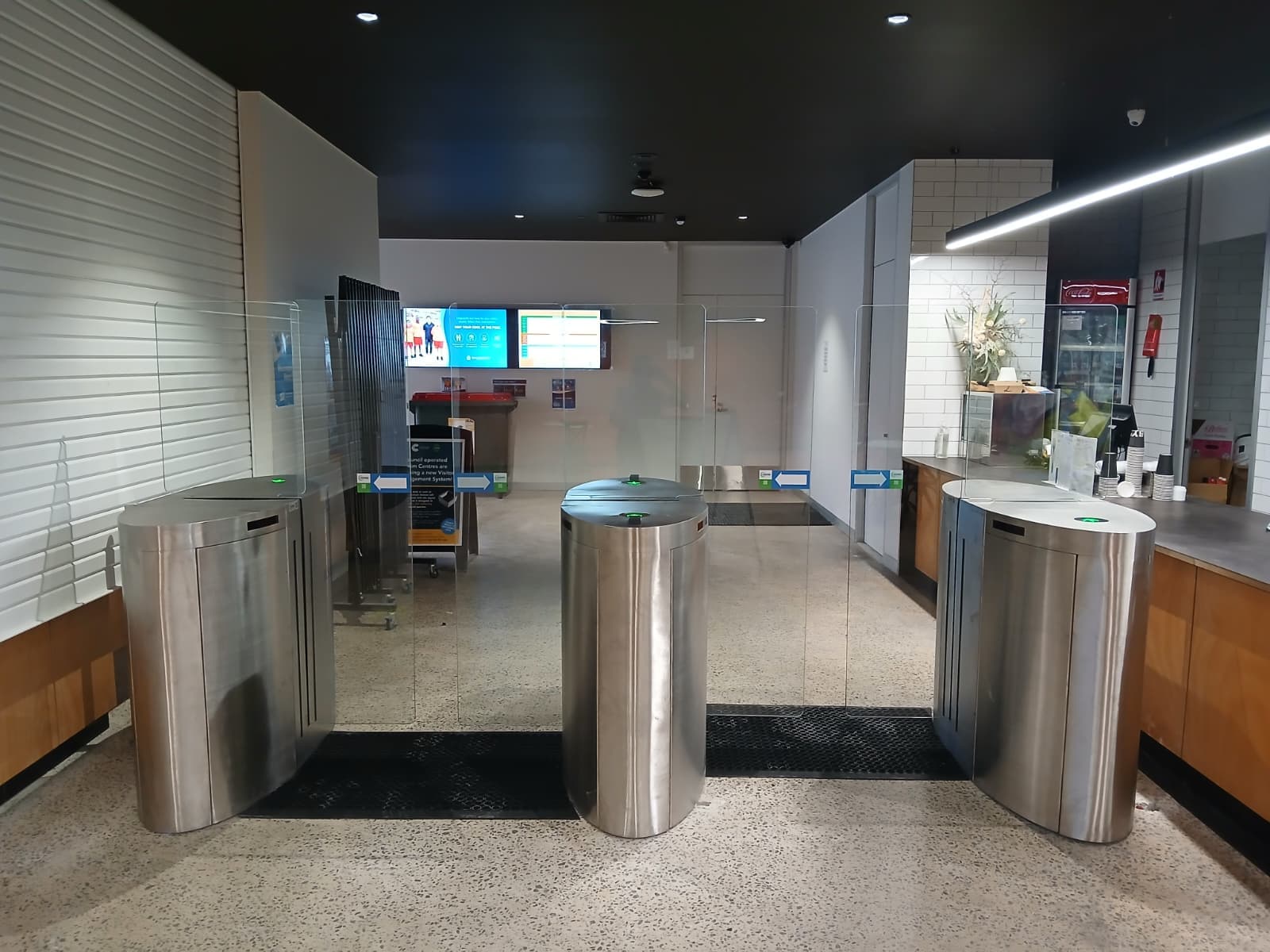
Speed gates and turnstiles both control pedestrian movement after a credential or operator authorises passage, but they create different physical and operational controls. Speed gates typically use powered glass or acrylic barriers and sensor arrays. Turnstiles use rotating arms or a full-height rotor. The right choice depends on risk, flow, accessible passage, supervision, environment, emergency behaviour and budget — not which product looks more secure in isolation.
The Practical Difference
A speed-gate lane usually detects a person through the cabinet, validates passage logic and moves a barrier out of the authorised path. A waist-height tripod or swing-arm turnstile mechanically meters one passage at a time, while a full-height turnstile creates a taller rotating enclosure. Product families vary widely, so confirm exact opening time, detection zones, barrier height, lane width, emergency mode and environmental rating from the proposed manufacturer and model.
Speed gate and turnstile comparison
| Decision factor | Speed gates | Turnstiles |
|---|---|---|
| Authorised flow | Often suited to fast, low-contact passage when credentials and user behaviour are consistent | Creates a more deliberate, mechanically metered passage |
| Bypass control | Sensors can detect passage exceptions, but alarms need supervision and response | Full-height formats provide more physical resistance; waist-height formats remain climbable |
| Typical setting | Supervised indoor lobbies and member entrances where flow and presentation matter | Commercial, venue or perimeter entries selected around the specific format and environmental rating |
| Accessible passage | A wider powered lane may be integrated into the bank | Usually requires a deliberately designed adjacent accessible gate or lane |
| Operational dependency | Sensor calibration, clear detection zones and prompt exception handling | Perimeter continuity, mechanical condition and a clear assistance process |
Use this as a shortlist only. The selected model and complete entrance design still need project-specific assessment.
Throughput: Measure the Whole Transaction
Speed gates can support fast, low-contact passage in a supervised lobby, especially when regular users present credentials before reaching the barrier. A turnstile may impose a more deliberate one-person movement. Real throughput also depends on reader response, failed credentials, bags, mobility aids, visitor checks, direction changes and the number of lanes. Test peak arrival patterns with the proposed credential and lane arrangement instead of relying on a headline people-per-minute figure.
Security: Define the Bypass You Need to Resist
Low barriers can be climbed or stepped over. Gaps may be squeezed through. A second person may follow an authorised user, and a valid credential may be shared. Sensor-rich speed gates may detect several passage patterns and raise an alarm, but detection needs an effective response. Full-height turnstiles provide greater physical resistance to casual climb-over than waist-height products, yet still require perimeter continuity, credential control and incident procedures. Use the tailgating prevention guide to define prevention, detection and response as separate controls.
What the Installed Entrance Shows
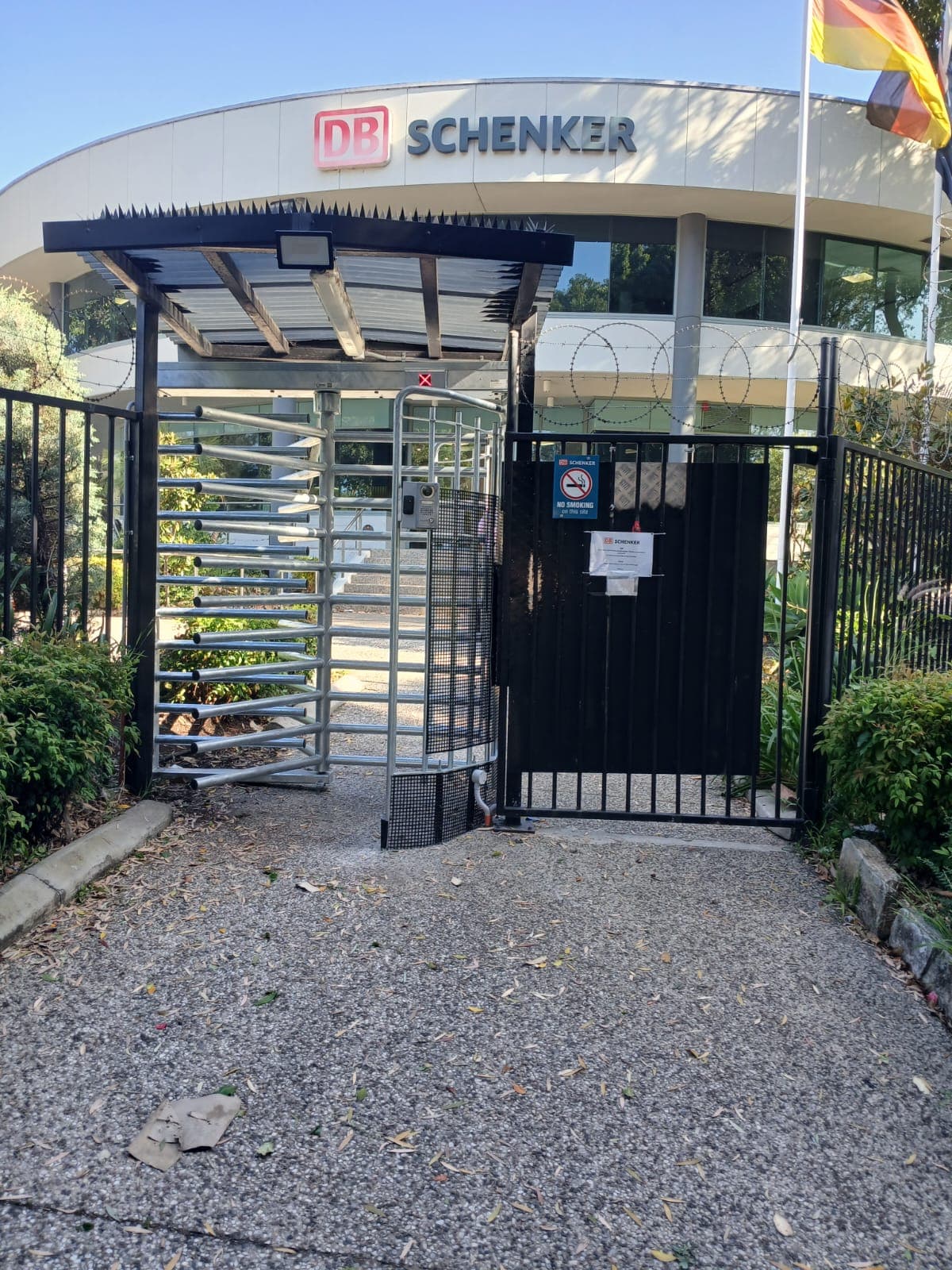
The Rapid project above is useful because the turnstile is only one part of the control line. The fence closes routes around the unit, the adjacent gate provides a separate passage, the canopy protects the entry equipment, and access devices sit where users can reach them before entering. A product comparison that ignores those surrounding elements will understate both scope and cost.
Accessibility Must Be Designed into the Route
Do not assume a standard lane provides compliant or dignified access. The federal Disability (Access to Premises — Buildings) Standards 2010 and the applicable building rules should be reviewed by the project’s qualified building and access consultants. The design may need a wider powered lane or a separate accessible gate, appropriate controls and circulation space. It must not create a secondary, poorly signed or inconvenient route for wheelchair users, people with mobility aids, assistance animals, luggage or prams.
Egress, Fire Interface and Power Loss
Confirm whether the controlled lane is on a required path of travel and how people evacuate during an alarm, power loss or equipment fault. NCC Part D1 addresses safe access and egress at a building level. The required fire-system interface, release direction, fail-safe or fail-secure behaviour and nearby exit arrangement must be resolved by the relevant building, fire and access professionals for the project; do not select a mode from a generic product comparison.
Environment, Supervision and Presentation
Speed gates are commonly considered for indoor, staffed environments where appearance and user flow matter. Full-height turnstiles are often considered for industrial or outdoor perimeters, provided the selected model and installation suit weather, corrosion, drainage and wind exposure. Those are tendencies, not rules. Confirm the product rating, canopy or enclosure needs, cleaning access, nearby guard position and how alarms are investigated.
Integration and Information Quality
Both product types can integrate with an access-control system, but the useful outcome depends on system design. Specify reader technology, direction control, anti-passback rules, visitor credentials, lift or door sequencing, occupancy events, alarm destinations, privacy and record retention. Decide how authorised passage is confirmed and what the operator sees when the lane detects an exception.
Compare Whole-Life Cost
Include cabinets or frames, lane count, accessible passage, floor preparation, power and data, readers, barriers, fencing, fire and building interfaces, commissioning, training, software, cleaning, preventive service and fault response. Also model the cost of queues, guard intervention and an unavailable lane. A lower equipment price can be a false economy if it requires extra construction, creates bottlenecks or cannot meet the security and accessibility requirement.
Selection Summary
Consider speed gates when the site needs fast authorised flow, electronic passage detection and a refined indoor presentation with an active response to exceptions. Consider turnstiles when deliberate metering, robust construction or greater physical resistance is more important. Validate either choice with peak-flow testing, an accessible-route review, security-risk assessment, egress and fire coordination, exact product data and a maintainable site layout.
What to Put in the Site-Assessment Brief
Provide a plan and photographs of the entrance; normal and peak pedestrian counts by direction; user groups and credential types; the behaviour to prevent or detect; staffed hours; visitor and delivery handling; accessible-route requirements; fire and egress information; indoor or outdoor exposure; available power, data and floor build-up; integration points; required reporting; and the acceptable response time if a lane is unavailable. This gives suppliers enough context to compare a complete layout instead of quoting unlike-for-like cabinets.
Common Questions
Do speed gates prevent tailgating?
They can detect and alarm on defined passage exceptions when correctly configured, but detection is not the same as prevention. Barrier height, sensor coverage, credential rules, supervision and the response to an alarm determine the real control.
Can speed gates be installed outdoors?
Only when the proposed model, enclosure, drainage, foundation, readers and power installation are designed for the actual exposure. Do not infer outdoor suitability from product appearance or from a generic product-family description.
Planning controlled pedestrian entry?
Compare the complete lane, not only the cabinet
Rapid Automatic Access can assess pedestrian flow, risk, accessible passage, credentials, supervision, egress, integrations and service access before recommending speed gates or turnstiles.
Related articles
Turnstiles & Speed Gates
Turnstiles for Crowd Control and Access Management
How to compare turnstiles by throughput, security, supervision, credentials, accessibility, emergency egress, environment and system integration.
Access Control & Security
How to Reduce Vehicle and Pedestrian Tailgating
A layered guide to reducing vehicle and pedestrian tailgating with entrance design, credentials, visitor workflows, detection and a defined response.
Automatic Doors
Automatic Doors and Accessibility: Why ‘Wave to Open’ Isn’t Always Inclusive
Learn why wave sensors can exclude some users and how accessible automatic-door activation, timing, feedback and safety features should be assessed.