The Future of Automated Access: How AI and IoT Are Shaping Gate and Security Systems in Australia

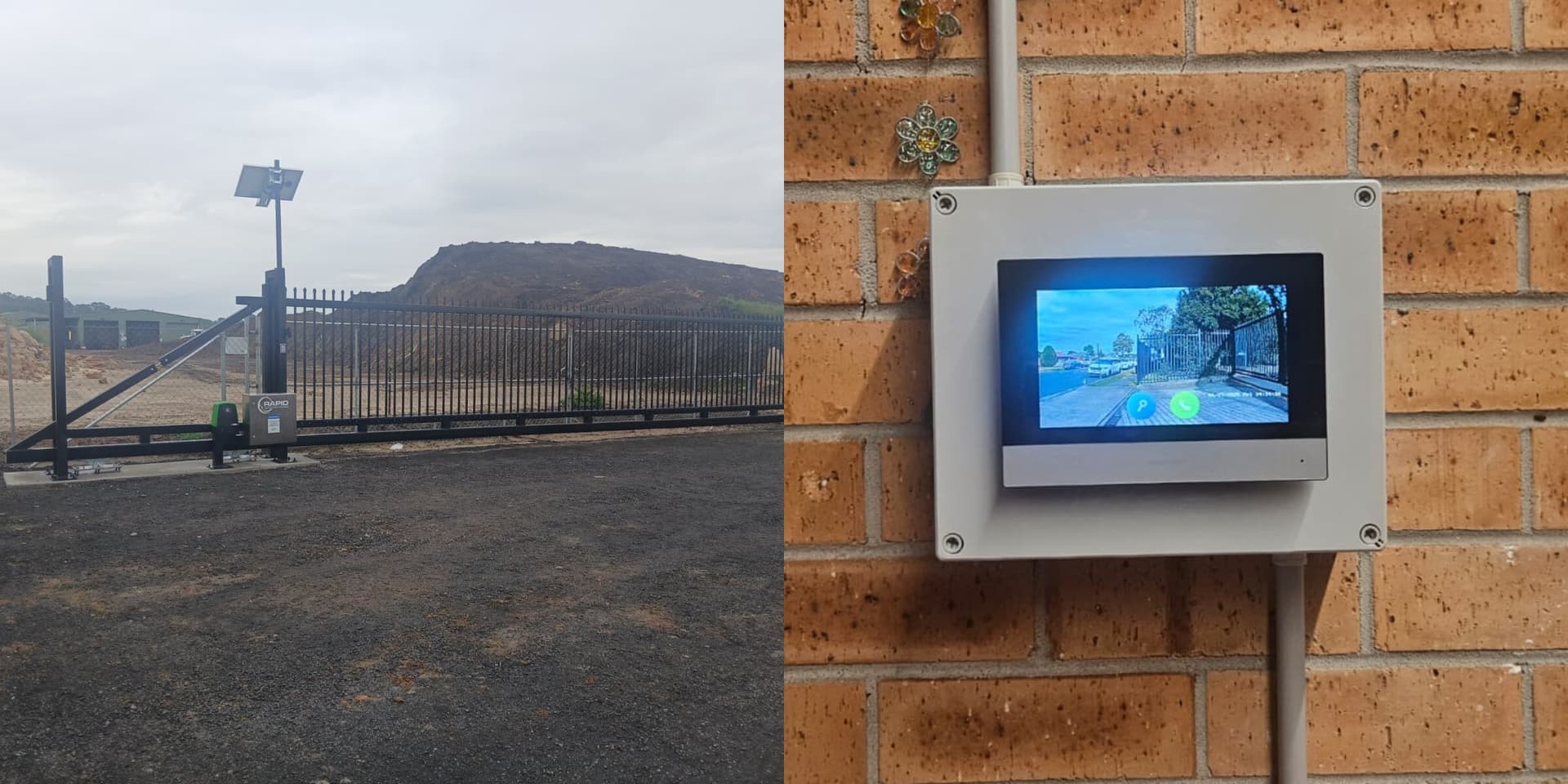
If you manage an apartment block in Sydney, a logistics yard in Brisbane, or a rural property in outer Melbourne, your “front door” probably isn’t a door at all, it’s a gate. And that gate is rapidly becoming a node in a much larger, smarter automated system. From machine-learning models that can predict motor failures before they happen, to encrypted reader protocols that close long-standing security gaps, to Australia-specific shifts like the nationwide 3G shutdown and tightening smart-device IoT security rules, automated access is in the middle of a quiet revolution.
This deep dive maps the next decade of access control in Australia, including automated gates and automated doors, what’s changing, why it matters, and how to plan an upgrade path that’s safe, compliant, cyber-resilient and genuinely useful.
Why now? Four forces reshaping automated access
- Connectivity is shifting under our feet. The shutdown of Australia’s 3G networks finally completed in late 2024 (Vodafone/TPG first, then Telstra and Optus), pushing legacy gate modems and remote openers onto 4G/5G or low-power IoT networks. If your gate controller still relies on 3G for alarms, open/close commands or telemetry, it’s already living on borrowed time, and a modern replacement is overdue. As telcos note, devices now need VoLTE and Band 28 (700 MHz) support to keep calling (including 000) on 4G, and Optus confirms the same 4G VoLTE requirement.
- Cyber security is becoming physical. Gate systems are no longer isolated relays; they’re IP devices on your network. Australia’s 2023–2030 Cyber Security Strategy and the ACSC Essential Eight baseline make it clear: organisations are expected to harden connected gear, log events, patch software and limit attack paths, expect growing scrutiny of edge devices like gate controllers. The broader threat picture in Australia’s latest Annual Cyber Threat Report only reinforces the point.
- AI is moving to the edge. Camera analytics, anomaly detection on motor current, and licence plate recognition are now small and cheap enough to run near the gate. That means faster decisions (e.g., “keep open while a pedestrian is detected”), less bandwidth, and better privacy-by-design because raw video or biometrics don’t need to leave the site.
- Regulation and standards are tightening. Australia has adopted modern CCTV/VSS standards (AS/NZS 62676 series), promoted secure access-control wiring (SIA OSDP) over legacy Wiegand, and updated safety rules for drive units (AS/NZS 60335.2.103:2024). Meanwhile, the government has shifted consumer IoT security from guidance to mandates via the Security Standards for Smart Devices Rules 2025, an early signpost for the broader IoT supply chain.
The new technical stack: from “dumb opener” to intelligent system
Think in five layers:
- Field sensors & actuators
- Safety sensors: photoelectric beams, safety edges, radar/lidar presence detection. These are non-negotiable for preventing entrapment and crush injuries, an issue highlighted by multiple incidents investigated by SafeWork NSW.
- Operational sensors: limit switches, motor temperature, vibration, gate speed/position encoders, power quality monitors.
- Actuators: drive units compliant with AS/NZS 60335.2.103:2024 (the 2024 update extends scope and clarifies hazards).
- Edge controller
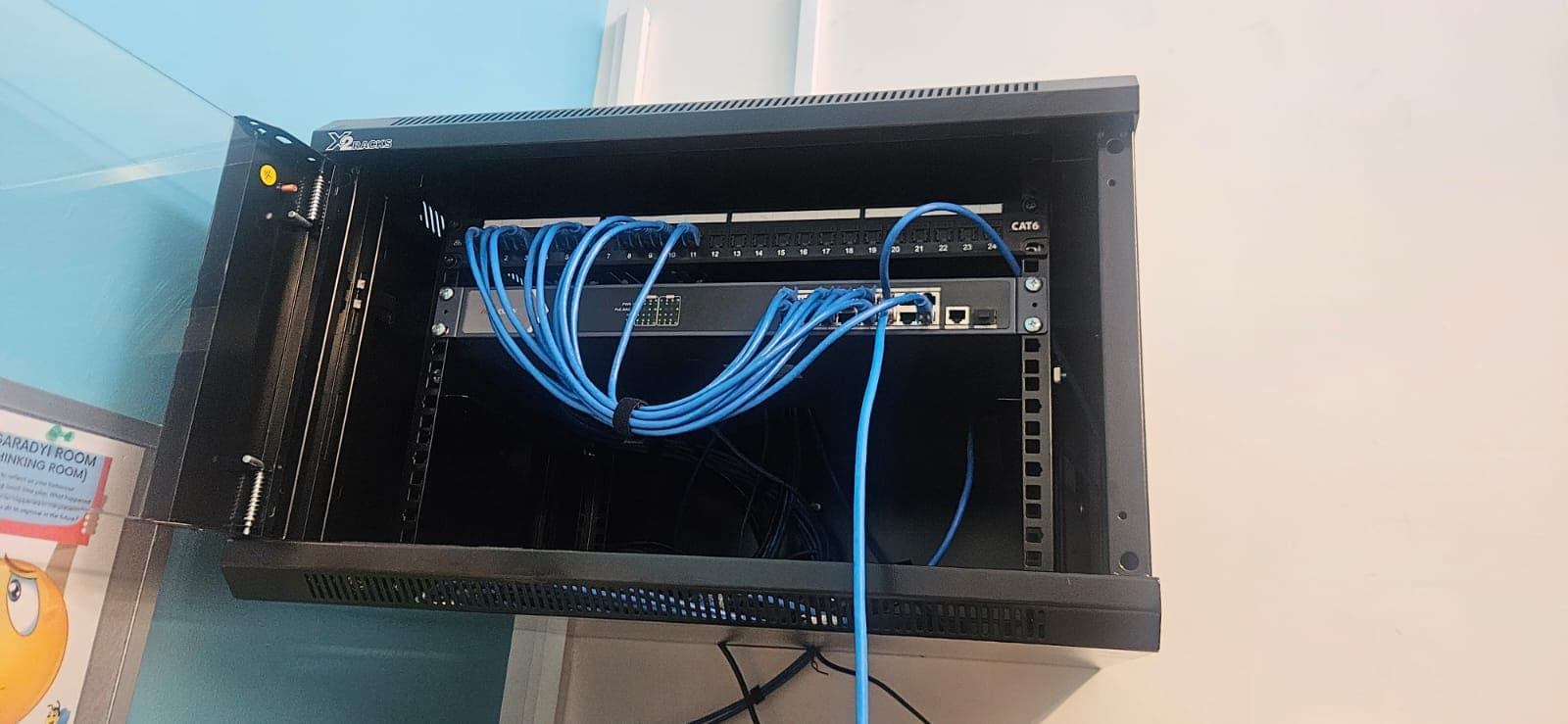
- A modern IP controller with local logic, event buffering and secure reader communications (e.g., SIA OSDP with encryption and supervision rather than legacy Wiegand). Vendors with strong Australian footprints (e.g., Gallagher) now ship OSDP-ready hardware and stress cyber-hardened designs.
- On-prem analytics
- Anomaly detection using simple models on vibration/current (MCSA) to spot bearings wearing, misalignment or rising friction, ideal for early fault flags without shipping raw signals to the cloud. Academic and industrial reviews of motor condition monitoring consistently highlight temperature, vibration and current sensors as high-value signals and survey methods such as motor current signature analysis.
- Video analytics for occupancy and vehicle intent: align with AS/NZS 62676 application guidelines (Part 4) for system design and performance expectations.
- Backhaul & cloud
- Networks: 4G/5G for bandwidth and ubiquity; Cat-M1/NB-IoT for low-power telemetry (see Telstra’s LTE-M/NB-IoT); LoRaWAN for rural or campus-scale, often via NNNCo in Australia. Designing multi-path comms (e.g., 4G primary + LoRaWAN heartbeat) materially increases resilience.
- Cloud services: remote diagnostics, credential lifecycle management (including mobile credentials), and update orchestration.
- Policy & governance
- Identity and credentials: movement from cards/fobs toward mobile credentials (BLE/NFC) with remote provisioning and revocation. Both international and local vendors support this, and it’s quickly winning in multi-family and enterprise settings.
- Event logging and compliance: align logging with ASD guidance; for sensitive sites, map controls to an ISMS and Critical Infrastructure duties.
Predictive maintenance: from reactive repairs to zero-surprise gates
A stuck gate is more than an inconvenience; for a distribution centre it’s lost hours and queuing trucks. Predictive maintenance (PdM) turns sensor data into early warnings:
- What to measure:
Cycle counts (usage), motor current (load), temperature (thermal stress), vibration/acceleration (mechanical wear), open/close times (drag), and obstruction events.
ML models (even simple thresholds + drift analysis) flag degradation weeks before failure, consistent with reviews of sensor suites for electric motors and techniques such as MCSA. - How to model:
Start with supervised thresholds (e.g., open time +15% vs baseline) and graduate to unsupervised anomaly detection on multivariate signals. Literature on electric-motor PdM supports current and vibration as leading indicators, perfect for compact gate drives. - Business impact:
Cross-industry studies regularly show PdM reduces unplanned downtime and maintenance costs, sometimes substantially; for example, McKinsey’s analysis of analytics-based maintenance outlines significant cost and availability upside. Use those numbers carefully for your own business case, but they align with what sites see once gates are instrumented. - Vendor cloud as a shortcut:
Some gate manufacturers now offer connected operator platforms with remote monitoring and alerting. Even if you don’t adopt their cloud long-term, the data model is a blueprint for your own telemetry and thresholds.
Tip: Pair PdM with safety assurance. Use the same sensor streams to automatically test beams/edges on a schedule and log the outcome. That turns safety testing from a clipboard exercise into a continuous control.
Smarter identity: LPR, mobile keys and the facial-recognition red line
Licence plate recognition (LPR) is mature, accurate and a natural fit for vehicle gates. It’s not “personal information” in every context, but when plates are tied to individuals in your systems, Australian privacy law applies. Build clear purpose limitation (e.g., access control and incident investigation only), retention limits and access controls, and align your camera tech with the AS/NZS 62676 VSS framework.
Mobile credentials (phones as keys) are hot because they reduce card printing, shrink loss/fraud, and make remote onboarding seamless. Australian-market systems (Gallagher, SALTO and others) now support BLE/NFC credentials and integrations with enterprise platforms, see Gallagher’s Mobile Credentials and SALTO KS Keychain/NFC. Budget for per-user credential subscriptions; the operational advantages usually outweigh the line item within months.
Facial recognition is different. Recent Australian determinations show regulators will treat biometric capture as sensitive data requiring strong legal grounds and consent. In Nov 2024 the OAIC found Bunnings’ in-store facial recognition breached privacy law. In Sept 2025 the OAIC reached a similar decision involving Kmart. If you’re considering face-based access, even for high-risk sites, engage counsel early, implement DPIAs, and consider less intrusive alternatives first. The OAIC’s updated guidance for business is a must-read: Facial recognition technology privacy risks.
Safety and compliance: what “good” looks like in Australia
- Drive and machinery safety
- AS/NZS 60335.2.103:2024 (2024) governs safety of electric drives for gates, doors and windows; ensure operators and retrofits comply.
- Apply the broader WHS duty of care and SafeWork NSW guidance on powered gates; NSW has publicly recorded severe incidents and fatalities, make safety devices and inspections routine, not optional.
- CCTV / video surveillance
- Align design, performance and commissioning with AS/NZS 62676 parts (system requirements, transmission, application guidelines). This is the modern framework Australia uses for VSS (the old AS 4806 series is largely superseded).
- Access control system standards
- AS/NZS IEC 60839.11.1 defines requirements for electronic access control systems (EACS). At the wiring/protocol layer, adopt SIA OSDP rather than Wiegand to get encryption and device supervision.
- Electrical integration
- Installations must follow the AS/NZS 3000 Wiring Rules (2018 with 2023 amendments), especially when adding power supplies, isolators, or integrating with building systems.
- Privacy & data breaches
- The Notifiable Data Breaches (NDB) scheme continues to record high volumes; the OAIC logged 595 notifications in H2 2024, with malicious attacks the dominant cause and phishing a standout vector. Gate/access systems often hold identifiable logs and camera data — treat them like any other sensitive system.
- IoT device security expectations
- Australia’s voluntary IoT Code of Practice (aligned to ETSI EN 303 645) set a baseline in 2020, and government papers in late 2024 outlined a path to mandatory smart-device security standards arriving via the Security Standards for Smart Devices Rules 2025. Expect “secure by default” requirements to harden the next generation of readers, controllers and sensors.
Connectivity choices for Australian conditions
- 4G/5G: Best for bandwidth and ubiquity; plan for VoLTE-only environments post-3G. If your gate relies on cellular for alarms, verify SIMs, bands (e.g., Telstra 700 MHz), and signal margins, site surveys still matter.
- Cat-M1 / NB-IoT: Low-power, deep indoor penetration, ideal for telemetry and alerts; Telstra and Optus both support IoT network options (LTE-M/NB-IoT coverage map) for enterprise. Use when you need cheap, persistent keep-alive plus modest data flows.
- LoRaWAN: For large sites, farms, or where cellular is marginal, LoRaWAN via NNNCo can connect counters, safety beams (state), solar/battery monitors and long-range e-stops. It’s not for video, but it’s perfect for heartbeat, diagnostics and maintenance flags.
- Wired first: If you can trench or reuse conduit, a single Ethernet run with PoE for cameras/readers + a small UPS outperforms any radio. Use cellular/LPWAN as a failover path.
AI at the perimeter: what’s useful today
- Anomaly detection on motion and power
Pair motor current and open/close duration to learn a “healthy” signature. When friction in rollers increases or wind loads rise, signatures drift. A simple unsupervised model (e.g., isolation forest at the edge) can alert before end-users notice sluggishness. Literature on electric-motor PdM validates current/temperature/vibration as leading indicators. - Real-time safety overlays
Edge models can detect pedestrians/cyclists near a sliding gate and hold open until the area is clear, reducing reliance on a single beam. This is especially valuable where SafeWork NSW has flagged historical entrapment risks. - Smarter scheduling
Feed the controller with occupancy data (badges, LPR, visitor QR) and weather (wind gusts). Let the system hold gates open in a “convoy” mode during shift change to reduce cycles and wear, or slow the wing speed in high winds to reduce mechanical stress. - Adaptive access
Combine risk signals, unusual time, door-forcing alarms, card seen on two readers miles apart, to step-up authentication (e.g., require mobile credential + PIN) automatically. This is where OSDP, encrypted controllers and end-to-end event logging pay off.
Cybersecurity for physical security (and vice versa)
- Baseline controls: Patch firmware, disable unused services, enforce MFA on cloud consoles, and segment the security VLAN from corporate IT. If your integrator shrugs at these, find a new integrator. The ACSC Essential Eight is a pragmatic starting point and applies to any Windows servers running VMS/ACS, too.
- Supply-chain scrutiny: Prefer vendors that publish hardening guides, sign firmware, and document their crypto (e.g., how OSDP keys are managed). Look for third-party assessments or government approvals where relevant (e.g., SCEC contexts). The SIA OSDP program (and OSDP-Verified listings) helps.
- Incident patterns: Australia continues to see cyber activity against infrastructure and enterprises; the ACSC threat report shows why strengthening your physical security stack (controllers, VMS, readers) is part of that uplift.
- Data minimisation: Keep only what you need. OAIC metrics and recent privacy decisions, Bunnings and Kmart, show regulators are watching high-risk tech, particularly biometrics, closely. Build retention/deletion into the project from day one.
Three Australian scenarios and what “good” looks like in each
1) Strata car-park in a coastal city
- Pain today: salty air corrodes contacts; residents lose fobs; contractors need temporary access; gate sometimes sticks after storms.
- Design moves:
- Replace legacy Wiegand with OSDP readers; roll out mobile credentials for residents, temporary QR for trades (Gallagher mobile, SALTO digital key).
- Add encoder + current sensing; ML at the edge to watch for drag after wind or grit ingress.
- Camera coverage per AS/NZS 62676 application guidelines; privacy signage with clear purpose/retention.
- Backhaul via 4G/5G with a LoRaWAN heartbeat if cellular is flaky in the basement.
2) Distribution depot on a ring road
- Pain today: trucks queue when the gate hangs; access lists change daily; after-hours incidents.
- Design moves:
- LPR lanes for enrolled fleets + visitor kiosk issuing time-boxed mobile credentials.
- Predictive maintenance on sliding gate drives; slow-down profiles when high wind is detected.
- Event correlation: step-up auth when a badge is used outside normal shift windows.
- Cyber uplift: apply Essential Eight on the VMS/ACS servers and require MFA for remote admin.
3) Rural property with intermittent power
- Pain today: brownouts and storms; 3G modem just died; long service callouts.
- Design moves:
- Solar + battery gate pack; LoRaWAN for telemetry, Cat-M1 fallback for alarms.
- Offline first: ensure local logic and manual release work even if backhaul is down.
- Maintenance: temperature + current sensing to flag sticking rollers so parts can be ordered before the next muster.
Buyer’s checklist for 2026 upgrades
- Safety first
- Drives comply with AS/NZS 60335.2.103:2024; beams/edges installed and auto-tested; risk assessment logged per SafeWork NSW guidance.
- Connectivity plan (post-3G)
- Confirm 4G/5G signal and VoLTE readiness; consider Cat-M1/NB-IoT for telemetry; LoRaWAN on large sites. Document failover behaviour (see ACMA 000/VoLTE advice).
- Cyber & privacy by design
- OSDP readers, encrypted controllers, signed firmware; MFA for admin; retention and consent for any video/biometrics; map to ACSC Essential Eight.
- Standards alignment
- VSS to AS/NZS 62676; EACS to AS/NZS IEC 60839.11.1; electrical work per AS/NZS 3000.
- Maintainability & data
- Telemetry available (current, temperature, cycles, event logs); APIs for exporting to your CMMS; clear SLOs for parts and service.
- Vendor transparency
- Ask for hardening guides, pen-test summaries, and lifecycle policies (how long will readers/controllers get updates?). Prefer vendors with proven Australian deployments and published cyber roadmaps.
What’s next: five predictions for the Australian market
- Mandatory IoT security standards will reshape the supply chain.
Expect “default passwords banned,” vulnerability disclosure policies, and update lifecycles baked into consumer-grade devices first, then cascading expectations for commercial gear used at homes and strata (see the new Smart Device Rules); global baselines align to ETSI EN 303 645). - Mobile credentials will be the default.
As BLE/NFC becomes ubiquitous and pricing stabilises, cards will persist for edge cases, but phones will carry the day, especially where remote provisioning and revocation is a priority. - PdM becomes table stakes.
Once sites see a couple of “we fixed it before it failed” wins, saving a shift or preventing damage during a storm, predictive alerts will become standard scope for new installs. The methods are well-established in motor maintenance; gates are a natural beneficiary. - Edge AI will favour privacy-preserving approaches.
You’ll see more on-device analytics with only anonymised events going to the cloud, which is both bandwidth-efficient and privacy-savvy in light of OAIC enforcement posture. - Critical-infrastructure thinking will trickle down.
As ASD and Home Affairs keep raising the bar, even non-regulated sectors will adopt better logging, segmentation, and incident response playbooks for their physical security stacks.
Conclusion: your gate is now a system — treat it like one
The old mental model of “a motor, a beam, a button” isn’t enough. In 2025 Australia, a gate is an intelligent edge device on a live network, bound by safety standards, privacy law, cyber baselines and the practical realities of wind, salt and power. The good news is that our domestic market is well-served by capable vendors and integrators, connectivity options are better than ever, and the cost of adding brains (and safety) to a gate is modest compared to the value at risk when it fails.
Approach your next upgrade with a system mindset: safety by default, connectivity with failover, AI that adds resilience not risk, secure protocols, and clean integration into your maintenance and identity stacks. Done right, automated access becomes more than a gate that opens, it becomes a dependable, measurable control point that keeps people safe, protects privacy, and pays for itself in fewer surprises.
Sources & further reading (selected)
- Cyber posture: 2023–2030 Australian Cyber Security Strategy.
- IoT networks in AU: NNNCo LoRaWAN coverage.
- Privacy enforcement: OAIC statement on Bunnings (Nov 2024).
- Mandatory IoT security standards (consumer): Home Affairs explanatory paper (Dec 2024).
Planning an upgrade?
Assess the whole access system — not just the gate motor
Rapid Automatic Access can review your gate, credentials, safety devices, connectivity and maintenance requirements, then recommend a practical staged upgrade.
Related articles
Automatic Doors
Automatic Doors and Accessibility: Why ‘Wave to Open’ Isn’t Always Inclusive
Learn why wave sensors can exclude some users and how accessible automatic-door activation, timing, feedback and safety features should be assessed.
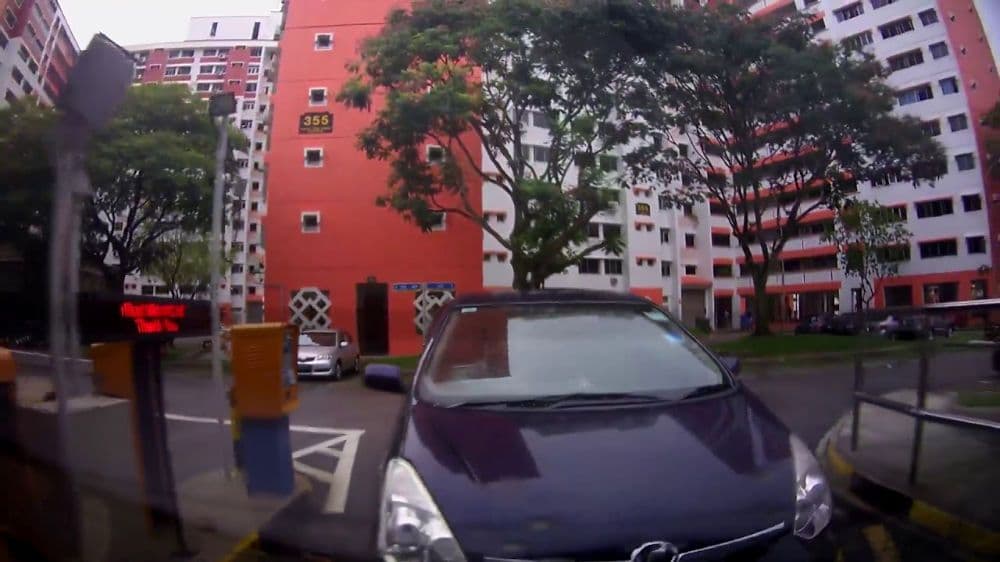
Access Control & Security
How to Reduce Vehicle and Pedestrian Tailgating
A layered guide to reducing vehicle and pedestrian tailgating with entrance design, credentials, visitor workflows, detection and a defined response.
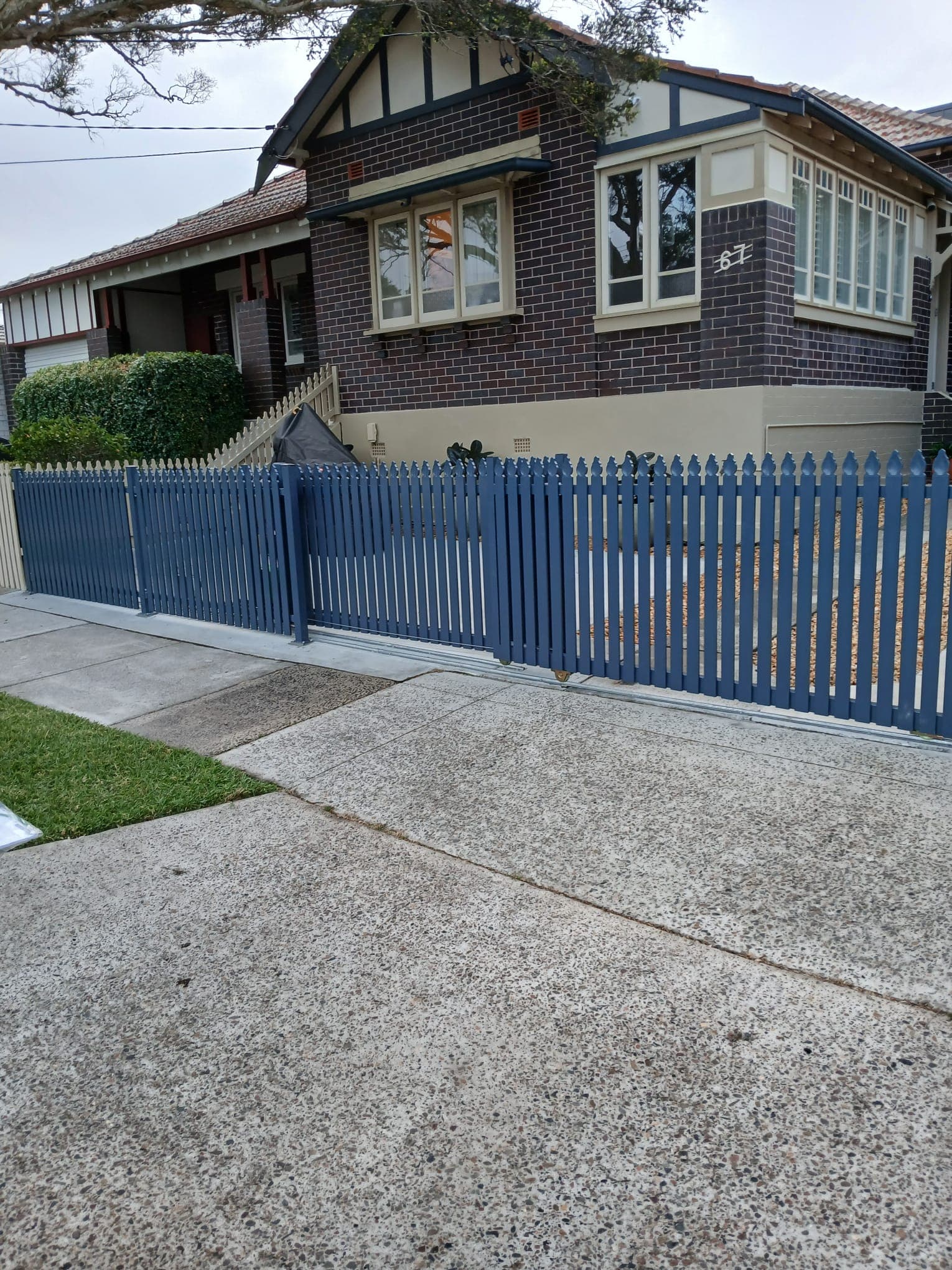
Sliding & Swing Gates
Sliding vs Swing Gates: Which Is Best for Your Property?
Compare sliding and swing gates by driveway slope, space, wind exposure, security, maintenance and traffic needs before choosing a system.